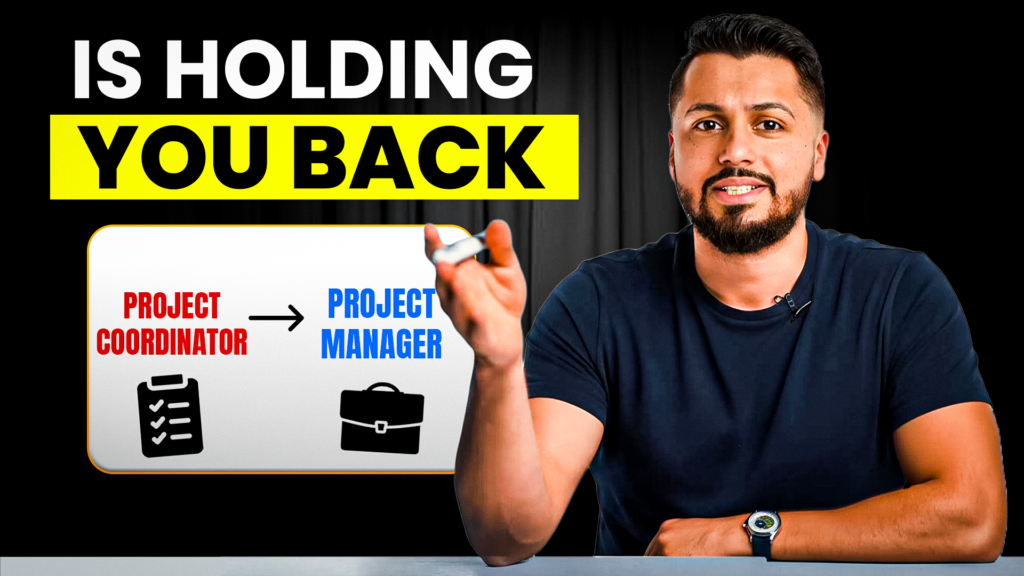
Most project coordinators have more project management experience than they realize. They have been trained by their job titles, their resumes, and their own managers to call it something else. And that mislabeling, not a lack of experience, is what keeps them stuck applying for PM roles and hearing nothing back.
I have been an IT project manager for over 8 years and helped over 100 people break into project management. A lot of them were not beginners. They were senior coordinators, project analysts, and operations leads who had been running real project work for years but could not get hired into the next title up. What changed for them was not new skills. It was finally describing the work they were already doing in the language of the profession they were trying to enter.
How the Coordinator Trap Works
You start a job as a coordinator. The title says junior. The work, very often, does not. You start owning tasks nobody else owns, running meetings nobody else wants to run, making decisions when stakeholders are unclear, and writing the status report because nobody else will. You absorb work that is actually project management, without anyone giving you the title.
Two or three years go by. You apply for project manager roles. And every resume you send says coordinator-level things: “Tracked tasks.” “Scheduled meetings.” “Supported the project manager.” That is not a description of your work. That is a description of your job title.
Hiring managers do not read between the lines. They scan for project management signals, do not see them, and reject you for not having PM experience. You walk away thinking you need more experience. You do not. You need a different way of describing the experience you already have.
The Principle: Describe the Work, Not the Title
If you organize cross-functional meetings, identify risks, get sign-off from a sponsor, and drive a project to delivery, that is project management. The fact that nobody handed you a PM title while you were doing it does not change what the work was.
To be clear about what this is and what it is not: this is not lying on your resume, stealing credit, or pretending you did something you did not do. This is correctly describing what you actually did. Most coordinators are so worried about over-claiming that they wildly under-claim. The job description was written for HR. It was never written to capture what you actually do every day.
Hiring managers do not reward modesty. They reward clarity. Here are the four moves that fix this, each taking about ten minutes to apply.
Move 1: Switch Task Verbs to Ownership Verbs
Most coordinators describe their work with task-level verbs: tracked, updated, maintained, supported, scheduled, coordinated. Those verbs sound like activity. Hiring managers are scanning for ownership and outcome.
Coordinator language: “Tracked tasks for the implementation team across multiple projects.”
PM language: “Owned the delivery of the customer onboarding rollout, coordinating across product, engineering, and support teams to hit launch on schedule.”
Same work. Different language. The first reads like an assistant. The second reads like a project manager. Every resume line that starts with a task-level verb is a chance to upgrade. Do not add things you did not do. Just describe what you did using the verbs that match the role you are trying to land.
Move 2: Meetings Are Stakeholder Management
Coordinators tend to describe meeting work the way calendars describe it: scheduled, coordinated, took notes, sent invites. But running a meeting, choosing who attends, setting the agenda, surfacing the right decisions, capturing what got resolved, is stakeholder management. That is exactly what hiring managers want to see.
Coordinator language: “Scheduled weekly meetings for the project team and tracked action items.”
PM language: “Ran the weekly stakeholder cadence for the program, driving alignment across product, engineering, and the executive sponsor, and surfacing risks for early escalation.”
If you have been the person running meetings, even when nobody officially handed you the responsibility, that is the language to use. You were not scheduling. You were managing the room.
Want a structured path into project management? Here is exactly how to become a project manager, step by step →
Move 3: Status Reports Are Project Communication
Most coordinators describe their status work like it is typing: wrote weekly updates, sent emails, kept the team informed. But a real status report tells stakeholders what is on track and what is at risk, surfaces decisions that need to be made, and creates the paper trail that lets senior leaders step in early. That is not typing. That is project communication.
Coordinator language: “Wrote weekly status updates for the project team.”
PM language: “Drove weekly project communication across the team and key stakeholders, flagging risks early, surfacing decisions for executive input, and keeping the program on track for delivery.”
If you have been writing the status reports for your team, you have not been keeping people informed. You have been driving the communication that holds the project together.
Move 4: Handling “So You Weren’t Actually the PM?”
You apply with the language above, you get the interview, and at some point the hiring manager looks at “Project Coordinator” on your resume and asks the question that derails most candidates: “So you weren’t actually the project manager?”
Most coordinators panic, backpedal, and say something like “well, technically no, but I helped a lot.” That answer ends the interview. Here is the answer that does not:
“My title was project coordinator. The work I was doing was project management. Let me walk you through what that actually looked like.”
Then you walk them through it: the scope you owned, the decisions you made, the stakeholders you managed, the deliverables you shipped. You do not apologize for your title. You explain what your title did not capture. People run work above their titles all the time, and hiring managers know it. They are not testing your honesty. They are testing whether you can describe your work without flinching.
Proof It Works: Six Interviews and a Senior PM Offer in Six Weeks
About six months ago, a project coordinator at a fintech company reached out. Three and a half years in the role. Twenty PM applications in the previous twelve months, two interviews, zero offers.
He did exactly what you just read: rewrote his resume with outcome verbs, translated his meetings into stakeholder cadences, reframed his status reports as project communication, and rehearsed the title answer until it stopped sounding apologetic. Fifteen new applications later, he had six interviews and an offer for a senior PM role, in just under six weeks. Same person. Same work history. Different language.
The Four Moves in One Breath
- Move 1: Switch task verbs to ownership and outcome verbs.
- Move 2: Describe meeting work as stakeholder management.
- Move 3: Describe status reports as project communication.
- Move 4: When interviewers question your title, lead with the work, not an apology.
The work is there. It has been there. You just have not been giving it the right name.
And if you want to go further than relabeling, if you want to run real project work in a structured environment with feedback from someone who has done this, that is exactly what my Live PMO is built for. Real projects, real ceremonies, real deliverables. It is the fastest way I know to close the gap between coordinator work and PM work. Join The Eddie System on Skool →