Every job posting says the same thing: 2 to 3 years of project management experience required. So you do what feels logical. You buy a PMP prep course, you watch fifty hours of YouTube videos, you memorize PMBOK terminology, you pass a certification. You feel ready, you start applying, and nothing changes.
Here is the uncomfortable truth I have watched play out with over 100 people I have helped break into project management: what is missing is not more knowledge. It is proof. Companies are not rejecting you because you do not know what a Gantt chart is. They are rejecting you because you cannot show them a project you have run, deliverables you have built, decisions you have made under pressure, or conversations you have had with stakeholders.
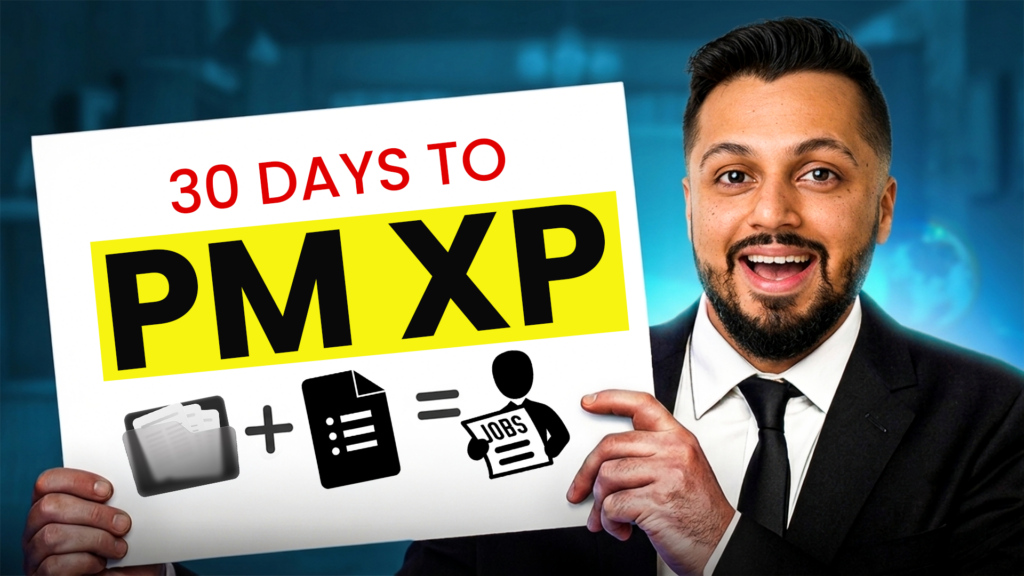
Most aspiring PMs have read more about project management than the average working PM. But they have nothing to show for it. That is the trap. And there is a way out that does not take years. It takes 30 days.
You Do Not Need a Job to Build PM Experience
This is the most important idea in this entire system. Almost every aspiring project manager operates from the assumption that experience can only come from a company hiring them. Until that happens, they are stuck.
That assumption is wrong. Strip away the certifications and the buzzwords, and project management is thinking clearly, planning, organizing, communicating, making decisions, solving problems, and tracking work. You can practice every single one of those things without a company, without a boss, without a team, and without a job offer.
You need four things: a simple project scenario you choose yourself, the basic PM tools (a charter, a RAID log, a status report, a few others), a weekly cadence you actually follow, and a plan that takes you through the whole thing in 30 days. Here is what those 30 days look like, week by week.
Week 1: Pick a Project and Set the Foundation
Week one is foundation week. Start by picking a practice project. Something realistic, not a textbook case study: launching a small online course, planning a renovation, organizing a community event. The project does not need to be glamorous. It needs to be specific.
Then learn the five phases at a working level: initiation, planning, execution, monitoring, and closeout. Most courses bury this in 40 hours of theory. You can learn the working definitions in 30 minutes.
Next, map out who would be involved. Stakeholders, sponsors, end users. Even if your project is hypothetical, assign real names to each role, because in interviews you need to talk about people, not abstractions. Finally, write a one-page project vision: what is this project, why does it exist, and what does success look like?
By the end of Week 1 you have a project, a structure, a stakeholder map, and a vision document. You are not theorizing anymore. You are running.
Week 2: Build the Six Core Deliverables
Week two is where most aspiring PMs discover what they have been missing this whole time. You build the six core deliverables every working PM uses:
- A project charter
- A RAID log
- A RACI matrix
- A project schedule
- A status report template
- A budget tracker
Each one takes 20 to 30 minutes to build the first version. By Friday of Week 2, you have a complete PM starter toolkit: real documents, in your project folder, that you built yourself.
This is the part most people have never done. They have watched videos about RAID logs. They have read about charters in their PMP prep book. But they have never actually created one for a project they are running. That difference is exactly what hiring managers are scanning for in interviews.
Want a structured path into project management? Here is exactly how to become a project manager, step by step →
Week 3: Run the Project and Document Every Decision
Week three is where the deliverables stop being templates and start being a real running project. Every day, you do three things: make a decision the project requires, update one of your PM tools to reflect that decision, and document how you made the call in a format you can talk about in interviews later.
Then you work through realistic scenarios. A vendor stops replying. A stakeholder gives you confusing requirements. Your timeline slips. Testing finds a bug. You do not just read about how to handle these situations. You decide what you would do, document the decision, and update the project to reflect it.
By the end of Week 3, your charter, RAID log, RACI, and status report are no longer static documents. They have been touched by real decisions, real escalations, real tradeoffs. That is what hiring managers mean when they say “give me an example.” You finally have one.
Week 4: Package the Portfolio and Build Your Interview Story
Week four is where you turn everything you built into something a hiring manager can actually evaluate. Polish your documents: clean formatting, real names, real dates. Package them into a PM portfolio: a simple folder, a simple link, six artifacts plus a one-page summary.
Then comes the most important piece: your interview story. The 90-second version of the project. What it was, why it existed, what you did, what went wrong, how you handled it, and what changed because of you.
Most aspiring PMs walk into interviews with abstract talking points and certifications. You walk in with a project, a folder, and a story. You are not preparing to become a project manager anymore. You are presenting as one.
Proof It Works: From Passed Over to Promoted in 60 Days
About a year ago, a woman in her late 30s reached out to me. Six years as a project coordinator at a healthcare company. Smart, reliable, and completely passed over for the PM role her boss kept giving to external hires. She had spent two years studying: CAPM, every PM YouTube channel, three different PMP prep books. Nothing changed.
Thirty days into this system, she had a portfolio. Forty-five days in, she had a project coordinator promotion offer at a different company. Sixty days in, that company moved her into a junior PM role. The shift was not more knowledge. It was finally having something to show.
The Whole System in One Breath
- Week 1: Pick a project, learn the structure, map your stakeholders.
- Week 2: Build the six core deliverables.
- Week 3: Run the project and document every decision.
- Week 4: Package it into a portfolio and build your interview story.
You do not wait for experience. You build it.
I put the entire step-by-step into a free playbook: templates for every deliverable, eight realistic scenarios with worked-through decisions, PM scripts for talking like an operator, and case studies of students who used this exact system. Download the free PM Experience Gap Playbook here →
And if you want to go beyond a solo practice project, this is exactly what I built The Eddie System for: a live PMO where you run a full 27-day project simulation, clear phase gates, and build experience you can defend in any interview. Join The Eddie System on Skool →