Project management is one of the most accessible, high-paying career paths available — and you don’t need a specific degree, a PMP certification, or years of experience to get started. But the path is widely misunderstood, and most of the advice online leads people into the same trap: study more, certify more, apply more, get rejected more.
This guide is different. It’s built from 8+ years of real PM experience and from watching over 100 career changers successfully break into the field. Here’s exactly how to become a project manager in 2026 — step by step.
What Is a Project Manager?
A project manager is the person accountable for delivering a specific outcome — on time, within budget, and to the agreed scope. They don’t do all the work themselves. They coordinate people, manage risks, make decisions under uncertainty, and keep stakeholders aligned.
Project managers work in every industry: technology, healthcare, construction, finance, retail, government, manufacturing, and more. The role exists wherever there’s complex work that requires coordination across teams.
Read more: What Project Managers Actually Do All Day (No BS)
What Do Project Managers Earn?
PM salaries vary by industry, location, and experience level:
- Entry-level / Junior PM: $55K–$80K
- Mid-level PM (3–5 years): $85K–$130K
- Senior PM (5–8+ years): $120K–$180K
- Contract / Independent PM: $80–$150/hour ($150K–$300K+ annualized)
- Program / Portfolio Manager: $150K–$250K+
The highest earners are typically contract PMs in IT and technology. Read: How I Made $300K in Project Management
Do You Need a Degree to Become a PM?
No. There is no degree requirement for project management. While some job postings list a bachelor’s degree as “preferred,” the vast majority of hiring decisions come down to demonstrated capability — can you plan, execute, communicate, and deliver?
Many successful PMs come from backgrounds that have nothing to do with project management: teaching, military, sales, customer service, operations, healthcare, and finance. Your existing experience is an asset, not a limitation.
Do You Need a PMP or Certification?
Not to start. Certifications like the PMP, CAPM, Google PM Certificate, and PRINCE2 can add credibility, but they don’t replace experience. Most hiring managers will choose someone with real project stories over someone with a certification and no operational experience.
Our recommendation: build experience first, then certify from a position of strength.
Read: Do You Need a PMP to Become a Project Manager?
The 6 Steps to Becoming a Project Manager
Step 1: Understand What the Role Actually Requires
Before you pursue PM, understand what the job involves day to day. It’s not about Gantt charts and software tools. It’s about:
- Owning outcomes, not just tracking tasks
- Making decisions when there’s no clear right answer
- Communicating bad news clearly and early
- Managing competing stakeholder priorities
- Staying calm when everything is on fire
If that sounds like work you’d enjoy, PM is probably a good fit. If you want to validate further: The Fastest Way to Know If PM Is Right for You
Step 2: Learn the Fundamentals (But Don’t Overthink This)
You need a working understanding of:
- Project lifecycle — initiation, planning, execution, monitoring, closure
- Key deliverables — project charter, scope statement, WBS, schedule, RAID log, status reports
- Risk management — how to identify, assess, and mitigate risks
- Stakeholder management — who has influence, who has interest, how to communicate with each
- Change management — what happens when scope, timeline, or budget needs to shift
- Methodologies — Waterfall, Agile, Scrum basics (you don’t need to be an expert in all)
You can learn these in 2–4 weeks of focused study. The mistake is spending 6 months in study mode instead of getting hands-on.
Step 3: Build Hands-On Experience (The Most Important Step)
This is where most aspiring PMs get stuck. You can’t get a job without experience, and you can’t get experience without a job. That’s the experience gap.
Here’s how to break through it:
- Lead projects in your current role — volunteer for cross-functional initiatives and apply PM methodology
- Volunteer for non-profit projects — real stakes, real stakeholders
- Operate in a simulation environment — the most direct path. Run realistic enterprise projects, produce professional deliverables, present through phase gates
The simulation approach is the fastest and most repeatable. Inside The Eddie System’s Live PMO, career changers build experience on 27+ enterprise project simulations — ERP rollouts, cloud migrations, SaaS implementations, and more.
Deep dive: How to Get Real PM Experience (Even Without a PM Job)
Step 4: Develop Your Soft Skills
Technical PM skills (planning, scheduling, budgeting) get you in the door. Soft skills determine your success:
- Communication — translating between technical and business audiences
- Facilitation — running meetings that produce decisions
- Conflict resolution — navigating disagreements diplomatically
- Influence without authority — getting things done when you don’t control the team
- Emotional intelligence — reading the room, building trust, managing pressure
Good news: if you’ve worked in any people-facing role, you’ve been building these skills for years. You just need to reframe them in PM language.
Step 5: Position Your Resume and LinkedIn
You don’t have “no PM experience” — you have untranslated PM experience. Reframe your existing work:
- “Managed client accounts” → “Managed stakeholder relationships across a portfolio of 15+ accounts”
- “Coordinated team schedules” → “Managed resource allocation across cross-functional teams”
- “Handled customer complaints” → “Managed scope changes and stakeholder escalations”
- “Organized company events” → “Delivered projects with fixed deadlines, variable scope, and multiple stakeholder groups”
For PM-specific resume templates and tools: The PM Briefcase includes 90+ templates including resume frameworks.
Step 6: Target the Right Roles and Companies
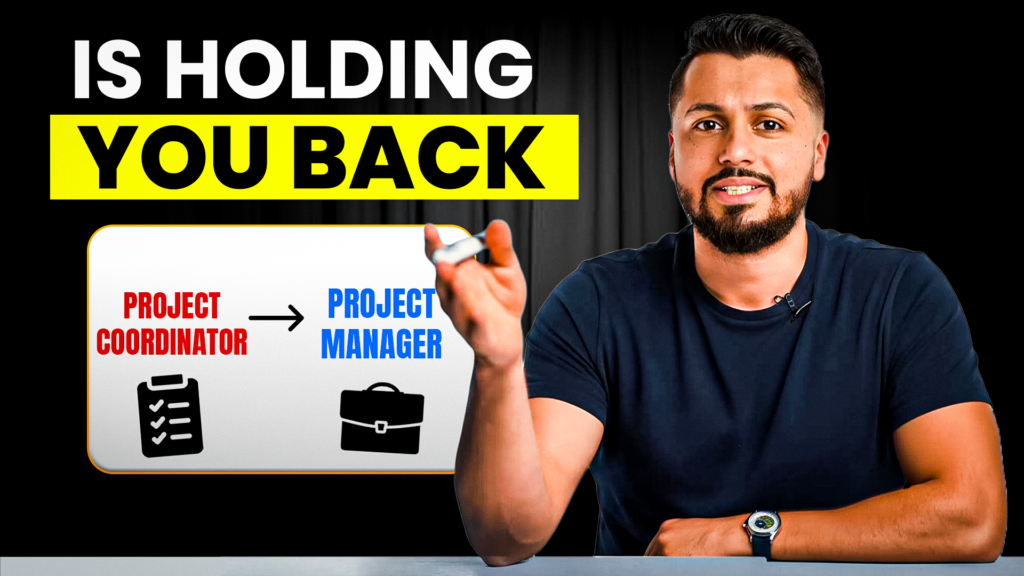
- Start with PM-adjacent roles — project coordinator, PMO analyst, implementation specialist. These are the entry points.
- Prioritize industries where you have domain knowledge — your background is your competitive advantage
- Focus on growing companies with active PMOs — they promote from within
- Network with working PMs — referrals bypass the ATS “lack of experience” filter
- Prepare for behavioral interviews — PM interviews are almost entirely behavioral. Have 5–7 STAR stories ready.
The 6 Types of Project Managers (by Career Stage)
Not all PM roles are the same. Here’s the progression:
- Project Coordinator — supports a PM, handles scheduling, tracking, documentation ($45K–$65K)
- Junior/Associate PM — runs smaller projects with oversight ($60K–$85K)
- Project Manager — owns full projects end-to-end ($80K–$130K)
- Senior Project Manager — manages complex, high-stakes projects ($120K–$180K)
- Program Manager — oversees multiple related projects ($140K–$200K)
- Portfolio Manager / PMO Director — strategic oversight of all projects ($180K–$300K+)
Read: The 6 Types of PMs Ranked by Pay
How Long Does It Take to Become a Project Manager?
With focused effort:
- Weeks 1–2: Learn PM fundamentals, assess transferable skills
- Weeks 3–6: Build hands-on experience (simulations, volunteer projects, internal projects)
- Weeks 4–8: Rewrite resume, update LinkedIn, prepare interview stories
- Weeks 6–12: Begin targeted job search, network with PMs
- Months 3–6: Land a PM-adjacent or PM role
The biggest variable is how quickly you build hands-on experience. Members inside The Eddie System typically see interview performance shift within 4–8 weeks.
Common Mistakes to Avoid
- Spending months studying instead of doing — knowledge without practice doesn’t convert to job offers
- Leading with credentials instead of capability — “I have a PMP” is weaker than “I managed a system migration”
- Applying to senior roles too early — start with coordinator/junior PM and grow fast
- Ignoring your domain expertise — your background in healthcare, finance, operations, etc. is an advantage
- Waiting until you feel “ready” — readiness comes from reps, not preparation
Frequently Asked Questions
Can I become a project manager with no experience?
Yes — but you need to build experience. You can do this through simulation environments, volunteer projects, or leading initiatives in your current role. The key is producing real deliverables and making real decisions, not just studying.
What’s the best project management certification for beginners?
If you want a certification, the Google PM Certificate or CAPM are the most accessible starting points. But we recommend building experience first — certifications are more valuable when backed by real project stories.
Is project management a good career in 2026?
Yes. PM demand is growing across all industries, salaries are strong ($80K–$300K+), remote work is common (especially in IT PM), and no specific degree is required. It’s one of the most accessible high-paying career paths available.
Can I become a PM without a technical background?
Absolutely. PM is about leadership, communication, and coordination — not technical skills. Many of the best PMs come from non-technical backgrounds. Your domain expertise from any field is a strength.
How do I get project management experience without a PM job?
The most effective paths: operate in a structured simulation environment like The Eddie System’s Live PMO, lead projects in your current role, or volunteer for non-profit initiatives. Read the full guide: How to Get Real PM Experience
Ready to start? The Eddie System is a live PMO where career changers build real PM experience through 27+ enterprise project simulations. Over 100 people have used it to break into project management — without waiting for permission.