How Project Managers Are Actually Made (It’s Not What Most People Think)
There’s a lot of confusion about how people become project managers.
Not confusion about job titles.
Not confusion about certifications.
Confusion about the actual process.
Most people believe project managers are created in one of two ways:
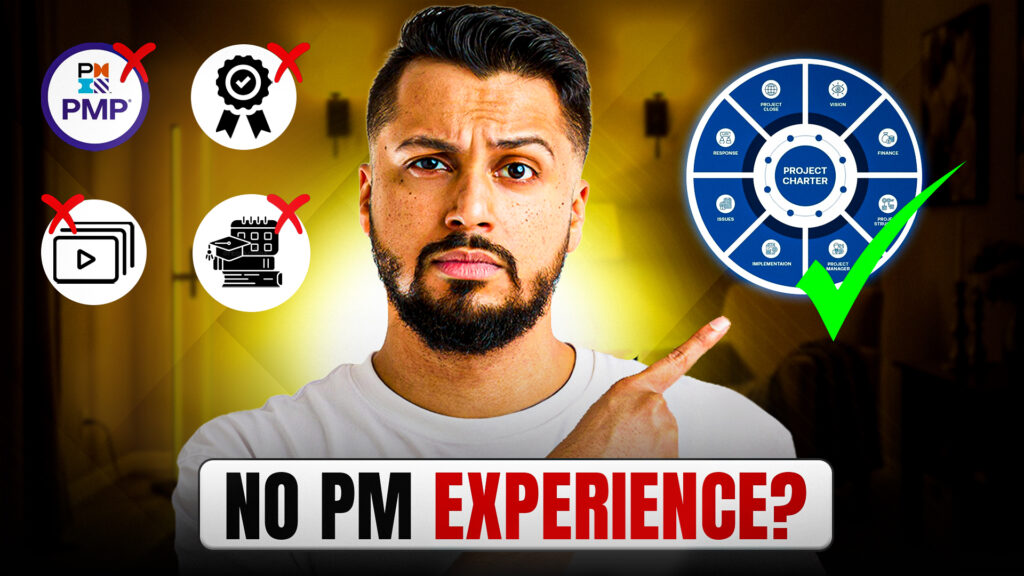
- You study project management — courses, videos, certifications
- You get lucky, land a PM job, and “figure it out” on the job
And because of this belief, a lot of smart, capable people end up stuck in a weird middle place:
They know the terminology.
They’ve learned the frameworks.
They understand the theory.
But when they look at a real PM role… they still don’t feel ready.
And companies don’t see them as ready either.
What’s missing from the picture is how project managers are actually made in the real world.
Once you understand this, the career path becomes a lot less confusing—and you stop forcing yourself down paths that don’t work.
The “Clean, Linear” Path Is a Myth
The common belief looks like this:
- Learn project management
- Get a certification
- Apply for PM roles
On paper, that sounds reasonable.
But in the real world, that’s not how project management works—especially inside actual companies.
Project management isn’t a role you step into fully formed.
Nobody wakes up one day and suddenly knows how to:
- manage stakeholders
- handle pressure
- navigate tradeoffs when things go wrong
Those things aren’t learned from studying.
They’re learned from being around real projects while they’re happening.
And this is the root disconnect:
People prepare like companies are hiring for “completion of learning.”
But companies hire based on something else entirely:
“Has this person been around real projects long enough to stay calm when things get messy?”
That’s where most PM careers get stuck.
How Project Managers Are Actually Formed in Real Organizations
In real companies, project managers are formed gradually through three things:
✅ Exposure
✅ Responsibility
✅ Trust
Here’s what that process looks like in plain language.
Step 1: Exposure (You’re around projects before you’re a PM)
It usually starts with someone being close to projects:
- sitting in meetings
- hearing decisions
- watching how problems show up and how they get solved
At this stage, you’re not “running” anything.
You’re learning how work actually flows.
Example:
You sit in a weekly status meeting and you realize the real project isn’t the Gantt chart—it’s the misalignment between teams, the missing info, the shifting priorities, and the subtle politics nobody says out loud.
That’s exposure.
Step 2: Responsibility (You get small pieces of real work)
Over time, people start giving you pieces of responsibility:
- organizing a timeline
- tracking risks
- coordinating updates
- following up with stakeholders
These aren’t glamorous tasks.
But they’re real tasks inside real projects.
Example:
You own the risk log and realize it’s not “documenting risks.” It’s preventing future pain. You learn to spot patterns early, raise things before they become issues, and escalate without sounding dramatic.
That’s responsibility.
Step 3: Trust (People start relying on how you respond)
Something important happens here:
People begin to trust you—not because of a title or a certificate—because they’ve seen:
- how you think
- how you communicate
- how you react when things change
Once trust is there, responsibility grows:
- you run parts of meetings
- you’re asked for your opinion
- you handle issues without constant oversight
And that’s how project managers are made.
Not all at once.
Not in one step.
But by being close to real work long enough that judgment develops.
Why Smart People Get Stuck Trying to Break In
Once you understand the real process, the next question becomes obvious:
If this is how PMs are formed in the real world, why do so many smart people get stuck?
The answer is simple:
Most people are trying to grow while being far away from real projects.
They prepare in isolation:
- videos
- frameworks
- notes
- resume tweaks
- certifications
And yes—some of that is useful.
But none of it increases your exposure to real project work.
And without exposure:
- responsibility doesn’t increase
- trust doesn’t increase
- your confidence doesn’t increase
So people end up in a frustrating place:
They know more than ever… but feel no more confident than they did a year ago.
Another trap is “waiting to feel ready.”
People tell themselves:
- “Once I finish this course…”
- “Once I get this certification…”
- “Once I feel more ready…”
But readiness doesn’t come before exposure.
Readiness comes from exposure.
The Moment This Becomes Obvious (A Real Example)
Here’s what happens to most people once they finally get near real projects:
They realize the work doesn’t look like what they studied.
Meetings are messy.
Priorities change constantly.
People disagree.
Decisions get made without perfect information.
That’s why the breakthrough for most people isn’t more theory.
It’s simply being closer:
- sitting in meetings
- helping with deliverables
- watching how experienced PMs handle conflict and pressure
And little by little:
- you recognize patterns
- you stop being surprised
- you sound calmer in conversations
- people trust you more
- you get more responsibility
That’s the real training.
What Companies Are Really Evaluating (Even If They Don’t Say It)
Most companies aren’t looking for a “perfect” project manager.
They’re looking for someone they can trust not to make things worse.
Because hiring a PM means putting someone in the middle of:
- deadlines
- budgets
- people with competing priorities
So interviewers are evaluating signals like:
- Can you stay calm when things are unclear?
- Can you communicate without escalating everything?
- Can you make reasonable decisions with imperfect info?
They listen for how you talk:
- generalities vs specifics
- theory vs lived scenarios
- tools vs tradeoffs
That’s why two candidates with similar resumes can get different outcomes.
One explains concepts.
The other explains what it was actually like to manage real work with real constraints.
That second person feels safer.
Not because they know more.
Because their judgment has been shaped by proximity to real projects.
The Two Paths Forward: Slow vs Intentional
Once you see this clearly, there are only two paths:
Path 1: The slow path (default)
- prepare in isolation
- wait for the right role, manager, or opportunity
- depend on timing, politics, and luck
Path 2: The intentional path
- prioritize exposure over credentials
- get close to real project work early
- observe decisions
- contribute where you can
- earn trust over time
The difference isn’t effort.
It’s where effort is directed.
One path keeps you learning.
The other moves you closer to the work you actually want.
The Best Question to Ask Yourself
Most people ask:
“What do I need to learn next?”
The better question is:
“How close am I to real project work right now?”
Because when you understand how project managers are formed, you stop optimizing for more information.
You start optimizing for proximity:
- proximity to work
- proximity to decisions
- proximity to how projects actually move inside companies
And that’s how readiness develops naturally.
Step Inside the Live PMO
If you want real project exposure—without waiting for permission—step into an environment where projects are actively happening and judgment is built through reps.
Step Inside the Live PMO – Skool.com/tesl
This is why breadth of project exposure matters — and why the Live PMO includes 27+ different scenarios. Explore the simulation catalog.
The making happens inside a project environment — not a classroom. See inside the Live PMO.
Project managers are not made in classrooms — they are made in project environments. The Eddie System is the closest thing to a real PMO you will find outside of a job. You run enterprise simulations, produce PMO-grade deliverables, and build the exposure that actually makes you a PM.