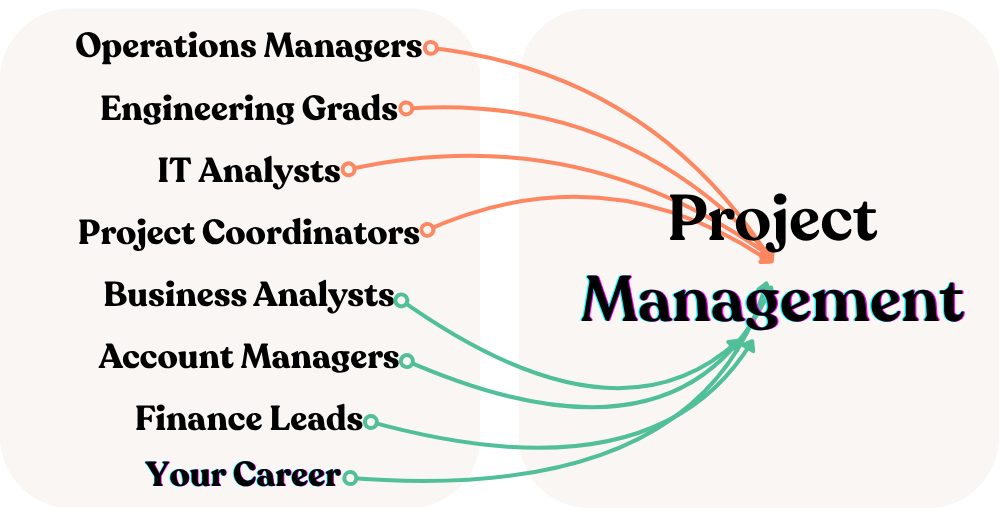
While the projects inside the PMO are IT-based, the skills, behaviors, and experience you build apply across industries — including healthcare, finance, operations, and more.
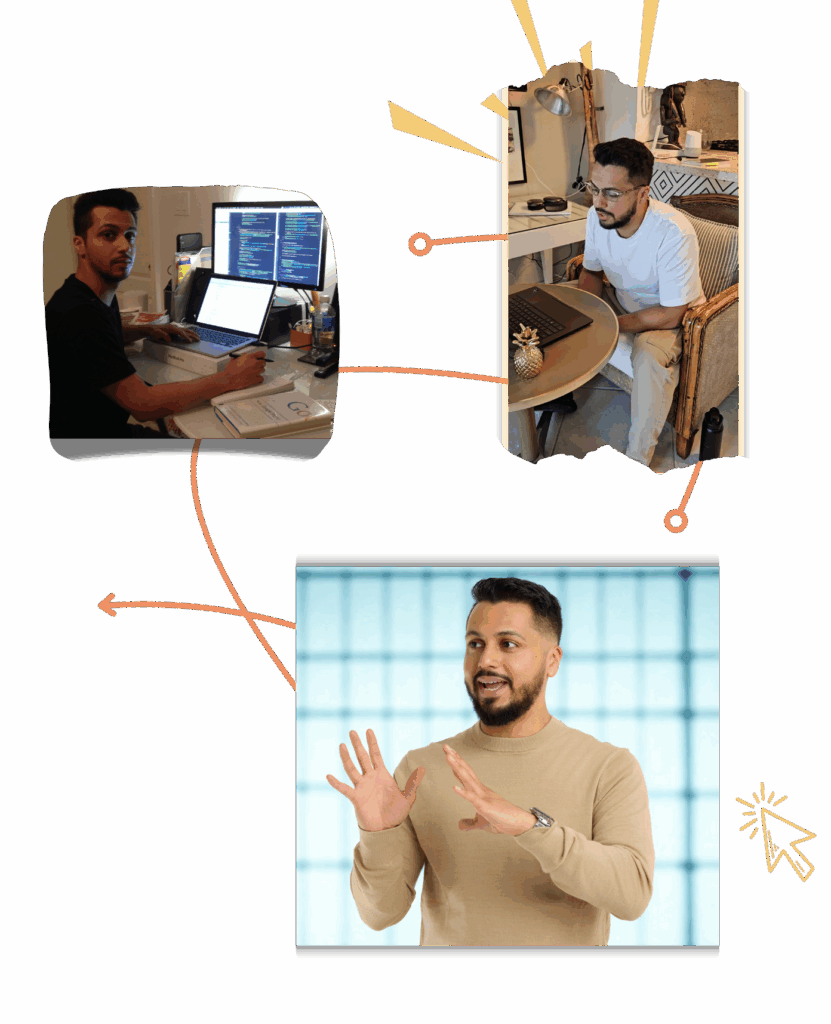
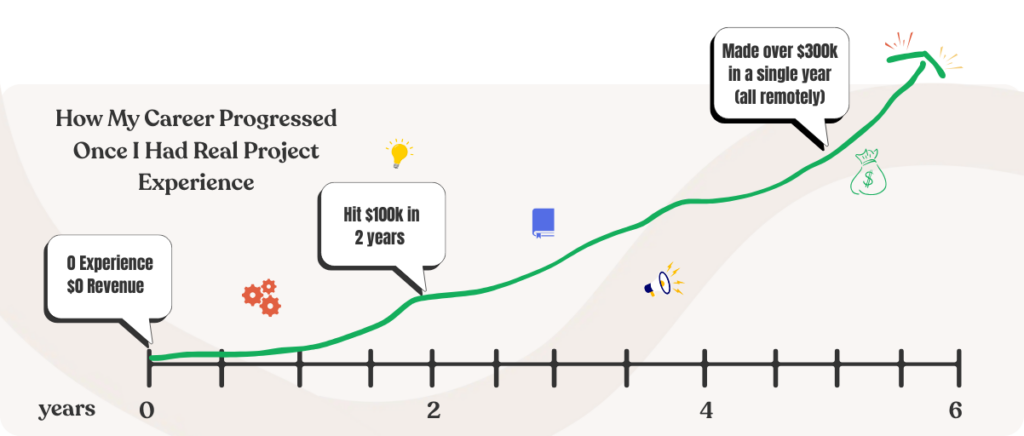
I didn’t start with experience. I didn’t start with credentials. And I definitely didn’t start with high-paying roles.
What changed my trajectory wasn’t chasing money — it was learning how real projects actually operate inside organizations.
Once I had exposure to real project environments, things compounded quickly.
I became more confident in meetings.
I understood how decisions were made.
I could speak to scope, risk, timelines, and stakeholders without guessing.
That’s when opportunities started opening up.
Within two years, I crossed six figures as a project manager.
Over time, that grew into managing increasingly complex IT programs — remote, contract-based, and high-impact.
At my peak, that experience translated into $300k+ in a single year, working fully remotely — not because I chased income, but because I had already operated at that level.
Today, I have 8+ years of experience managing IT projects ranging from $100k initiatives to multi-year, multi-vendor programs worth tens of millions of dollars.
And the most important lesson I learned is this:
Income follows experience. Confidence follows exposure.
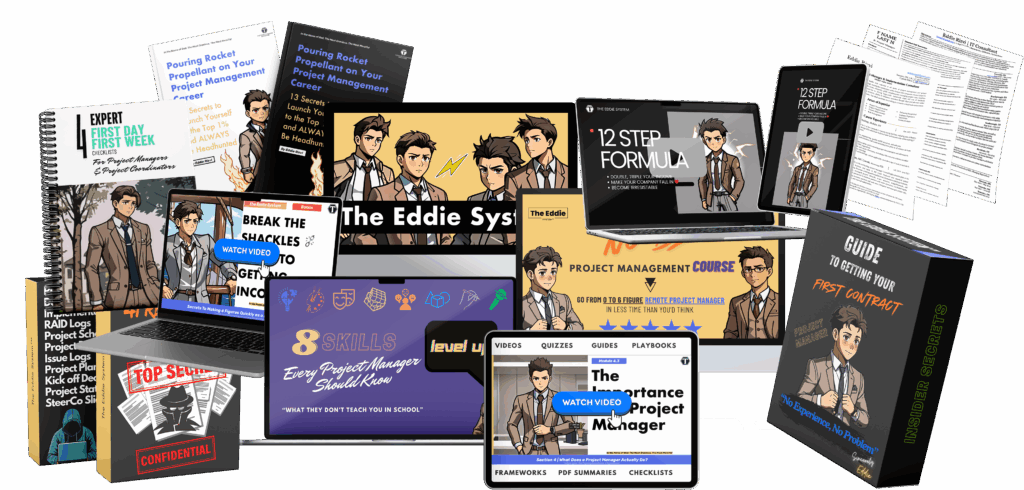
That’s exactly what The Eddie System is designed to give you.

Over the last 8+ years, I’ve worked across real IT projects — small initiatives, large programs, multiple vendors, and high-stakes environments.
Along the way, I invested thousands of hours and tens of thousands of dollars into courses, coaching, mentors, and frameworks — trying to find the one roadmap that turns someone into a great project manager.
Here’s what I eventually realized:
There is no secret formula.
There is no checklist.
And there is no shortcut.
Because project management isn’t learned linearly.
What actually separates strong project managers from everyone else isn’t knowledge.
It’s exposure.
Being inside real projects.
Seeing how decisions are made.
Understanding how tradeoffs happen under pressure.
Learning how communication actually works — not how it’s described on slides.
That’s why traditional “roadmaps” break down.
They assume project management is something you learn first and apply later.
In reality, it’s something you absorb by operating inside the environment.
What Actually Develops at the Same Time — Inside Real Projects
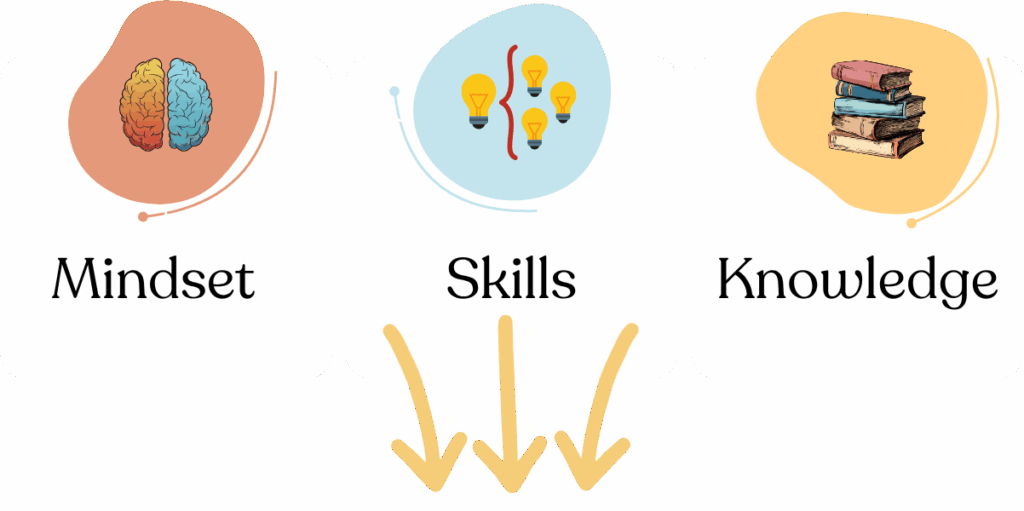
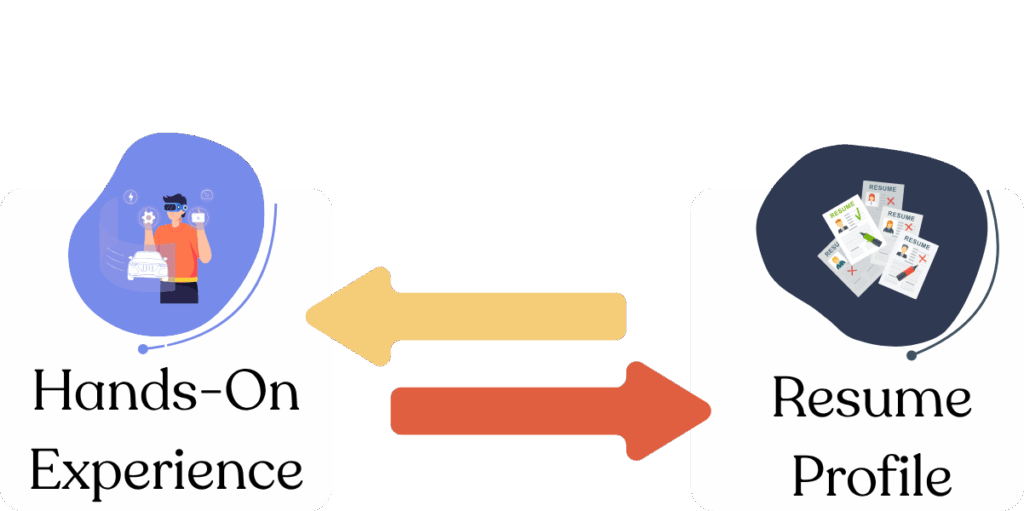

Inside real project environments, these don’t happen one by one — they develop together:
Mindset — how PMs think under uncertainty
Skills — communication, prioritization, decision-making
Knowledge — frameworks, terminology, context
Hands-On Experience — real deliverables and accountability
And when those develop together, something changes:
Your résumé starts sounding different.
Your interviews feel different.
And people start treating you like someone who’s already been there.
You don’t “follow” your way into project management.
You operate your way into it.
This is why I didn’t build another course.
I built a live Project Management Office —
so people could gain experience the same way real project managers do.
Walk into any well-run project — in tech, healthcare, construction, or finance — and you’ll notice the same things:
Clear structure.
Tight communication.
Forward momentum.
That isn’t luck.
And it isn’t just talent.
It’s the result of a project manager who has operated inside real projects, learned how decisions are made, and built confidence by doing the work — not just studying it.
That’s what The Eddie System™ is designed to give you.
Inside The Eddie System, experience is built in three phases:
Foundation (core mindset + PM fundamentals)
Exposure (live PMO simulations and delivery)
Translation (interviews, resumes, job landing)
Instead of memorizing theory, you operate inside a live PMO environment.
You manage realistic initiatives end-to-end.
You create the same deliverables used inside real companies.
And you learn how project managers actually think, speak, and lead.
Experience is leverage.
It’s what separates people who talk about project management
from people who can say, with confidence:
“Yes — I’ve managed projects like this before.”
And no — this isn’t about pretending, padding your résumé, or inventing fake projects.
This is about earning experience in a way hiring managers recognize and respect.
When you train inside The Eddie System, you’re not watching from the sidelines.
You’re leading initiatives, solving real problems, managing scope and timelines, and communicating like a professional.
So instead of spending years in classrooms —
or thousands on credentials that don’t create confidence —
You build experience.
And that’s how people actually transition into high-level project management roles.
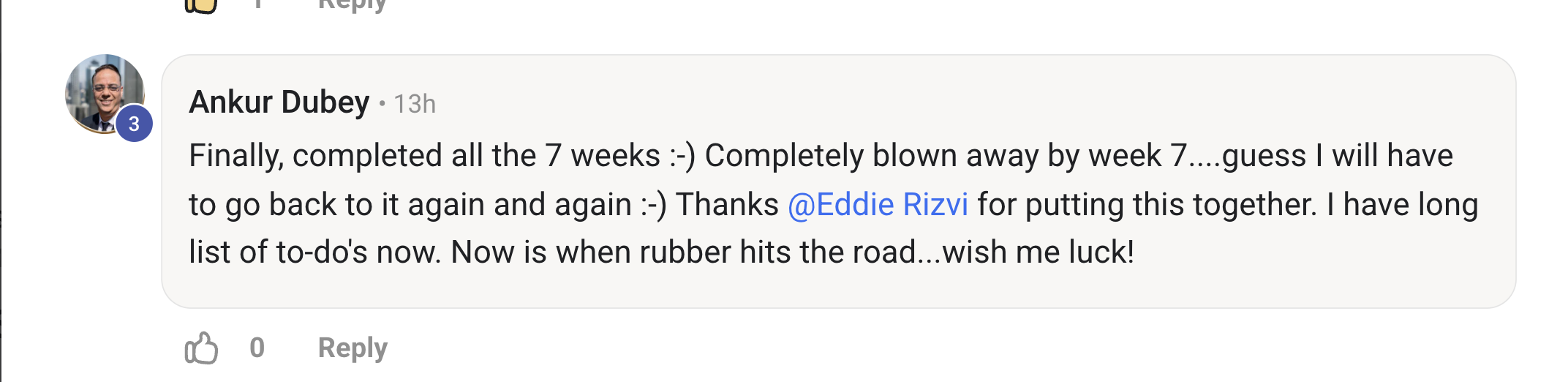
Completed The Eddie System. So much great information to take in. Excellent layout and very easy to understand. Now time for execution.
Previous Profession: Business Analyst
Inside the PMO, you will:
This isn’t theory.
And it’s not hypothetical.
It’s repetition inside a real operating environment.

Most “hands-on” programs still keep you at arm’s length.
They give you templates.
They give you assignments.
But they never put you inside the system.
The Eddie System does the opposite.
You see how projects unfold in real time.
You hear how experienced PMs talk.
You learn what matters — and what doesn’t — in actual delivery.
Over time, something shifts:
You stop sounding like someone learning project management.
And start sounding like someone who’s already done it.
That’s what hiring managers recognize.

That’s why every part of The Eddie System is built around real projects, real workflows, and real PM behavior — not coursework.
And that’s also why members inside the PMO don’t just “learn” project management…
They operate like project managers.
Not testimonials.
Not hypotheticals.
Most programs try to tell you that their experience is “real.”
The Eddie System doesn’t ask you to believe anything.
You can see it.
Inside the PMO, projects are constantly moving through real stages — initiation, planning, execution, and closure — exactly the way they do inside real companies.
What you’re looking at below isn’t marketing material.
It’s what members are actively working on.
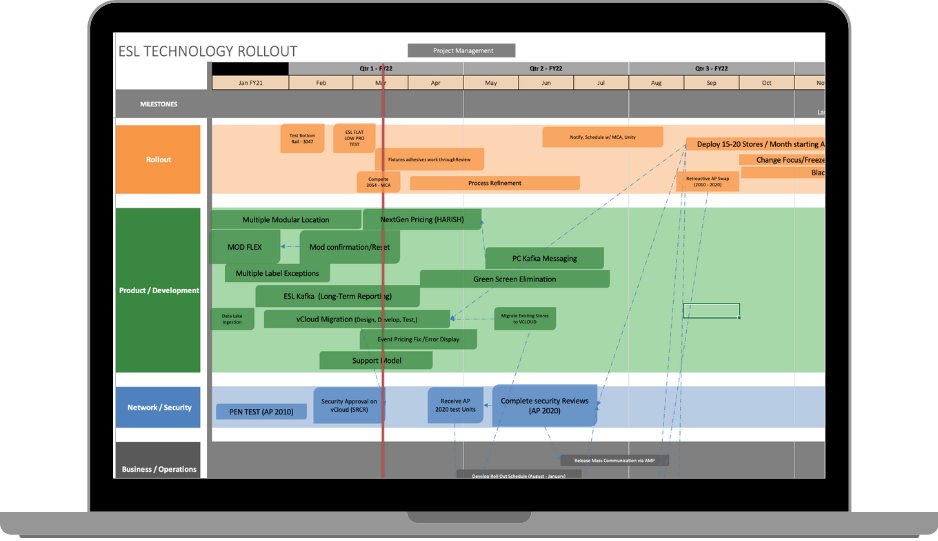
At any given time, multiple IT projects are active inside the PMO.
Not mock assignments.
Not one-off exercises.
Full project lifecycles with real constraints, timelines, and tradeoffs.
Members are creating and managing:
Project Charters
Stakeholder Registers
Schedules & timelines
RAID logs
Scope and change decisions
Deployment and rollout planning
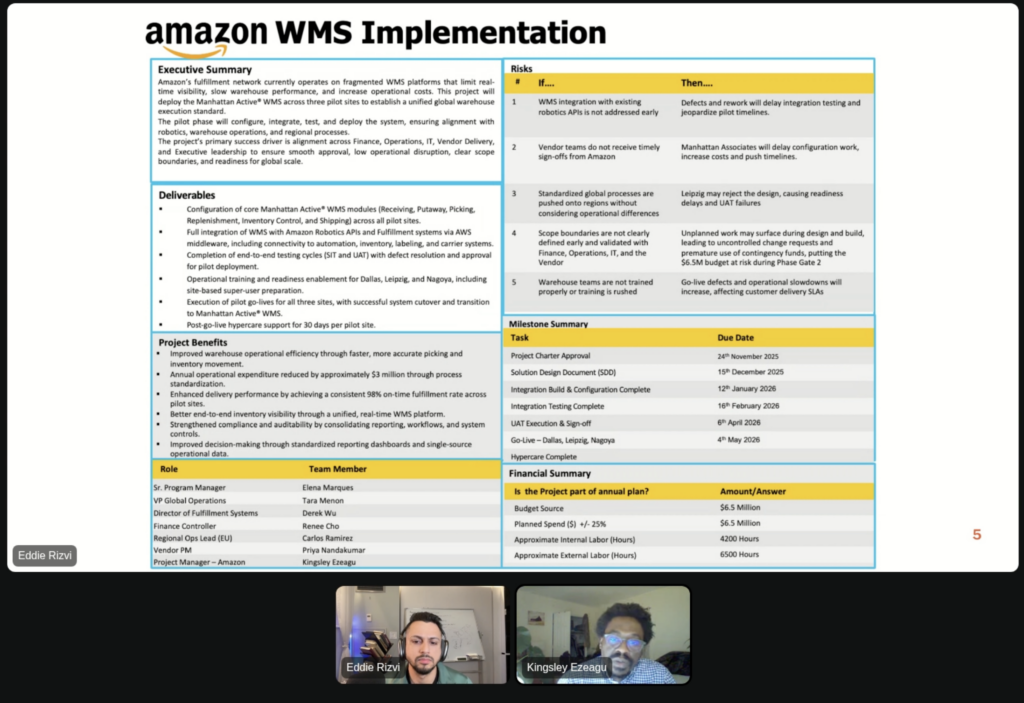
Projects inside the PMO don’t just “exist.”
They move.
Members are required to present their work, justify decisions, and move projects forward through actual phase gates, including:
Initiation → Planning
Planning → Execution
Execution → Closure
Just like in real PMOs, progress isn’t assumed — it’s earned.
This is where confidence is built:
Explaining scope decisions
Defending timelines
Communicating risk
Answering real questions
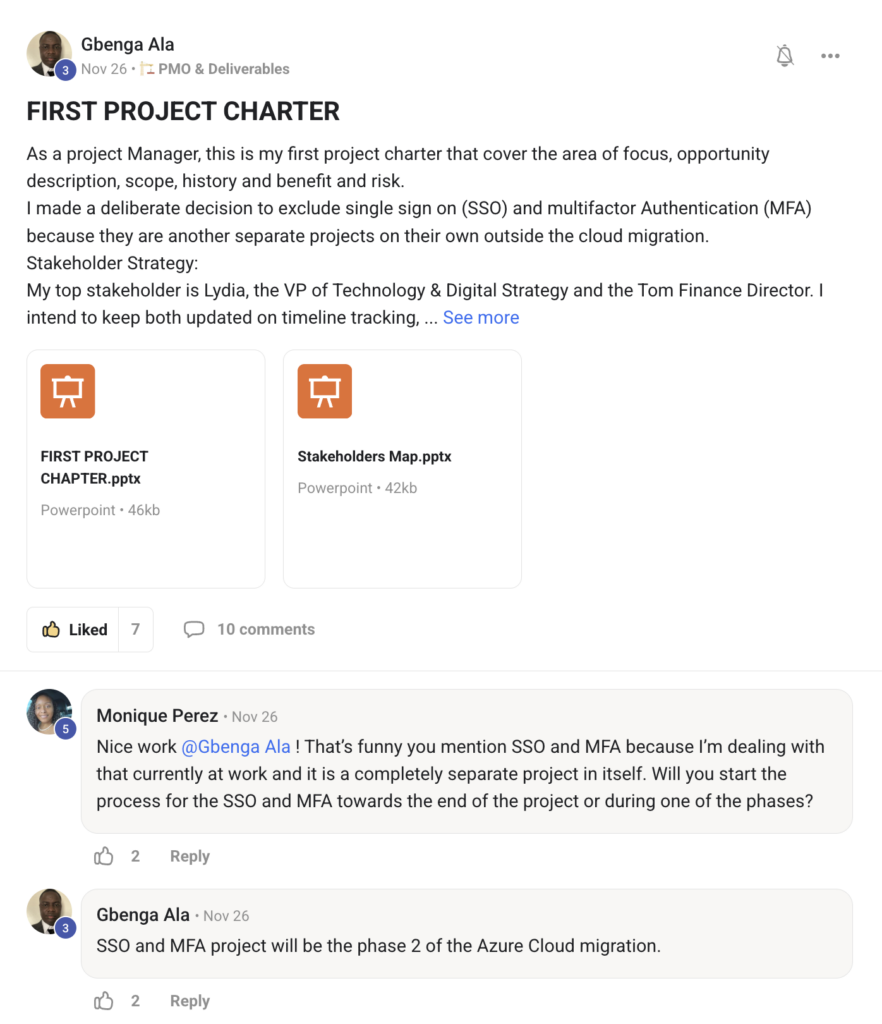
The most telling proof isn’t what people say —
it’s how they start to think, speak, and operate.
Inside the PMO, members go from:
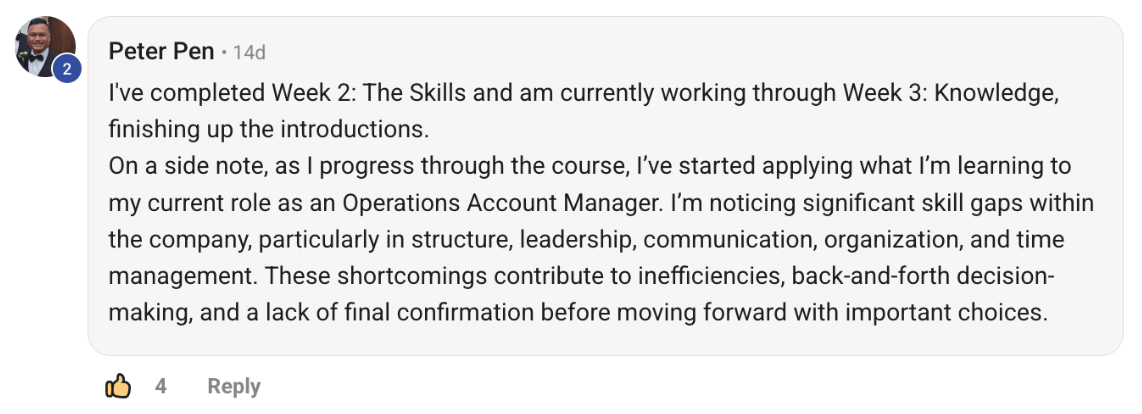
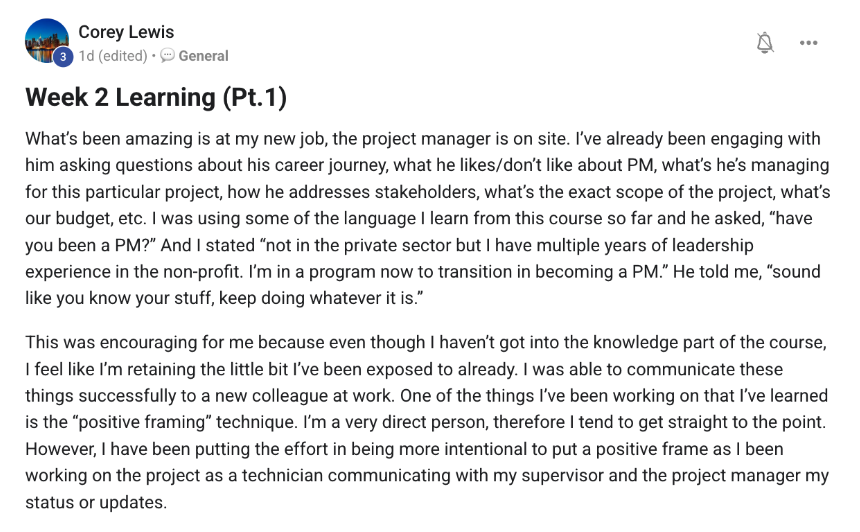
“I’m trying to break into PM”
to
“Here’s how I handled scope, risk, and stakeholders on my project.”
You’ll see members:
Reflecting on decisions
Asking better questions
Communicating with clarity
Applying PM language naturally
This is what happens when experience compounds.
This is why the experience is defensible.
You’re not claiming knowledge.
You’ve already been inside the environment.

Once you’ve operated inside a real PMO, interviews stop feeling like performances.
You’re not guessing what to say —
you’re speaking from experience.
And that’s exactly what the next part of the system is designed to support.
Once you’ve operated inside a real PMO, something subtle but important happens.
Interviews stop feeling like performances.
And you stop sounding like someone trying to become a project manager.
Not because you memorized better answers —
but because you’re no longer guessing.
You’ve already been inside the environment.
Hiring managers aren’t listening for definitions.
They’re listening for:
How you frame problems. How you explain decisions. How you talk about tradeoffs. How you communicate under uncertainty.That’s where most candidates fall apart.
They’ve studied project management —
but they’ve never operated inside it.
When you’ve been inside a PMO, your answers sound different.
You don’t say:
“I would handle risk by…”
You say:
“On my project, this risk came up — here’s how we handled it.”
That distinction matters.
The experience built inside The Eddie System isn’t hypothetical.
It’s grounded in:
Real project structures. Real deliverables. Real constraints. Real decision-making.So when a hiring manager asks:
“Tell me about a project you worked on”
“How did you manage scope or stakeholders?”
“What did you do when something went wrong?”
You’re not inventing scenarios.
You’re describing work you’ve already done.
That’s what makes the experience defensible —
and why it holds up in real interviews.
Most people try to convince hiring managers they’re ready.
People coming out of the PMO don’t need to convince anyone.
They speak naturally.
They answer calmly.
They explain tradeoffs clearly.
Because they’ve already been there.
Confidence doesn’t come from preparation alone.And exposure is exactly what most people are missing.

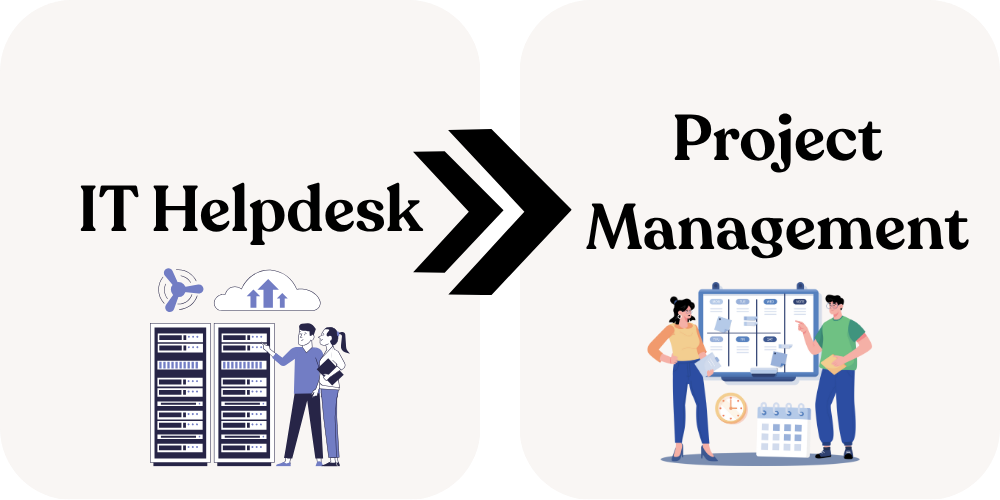

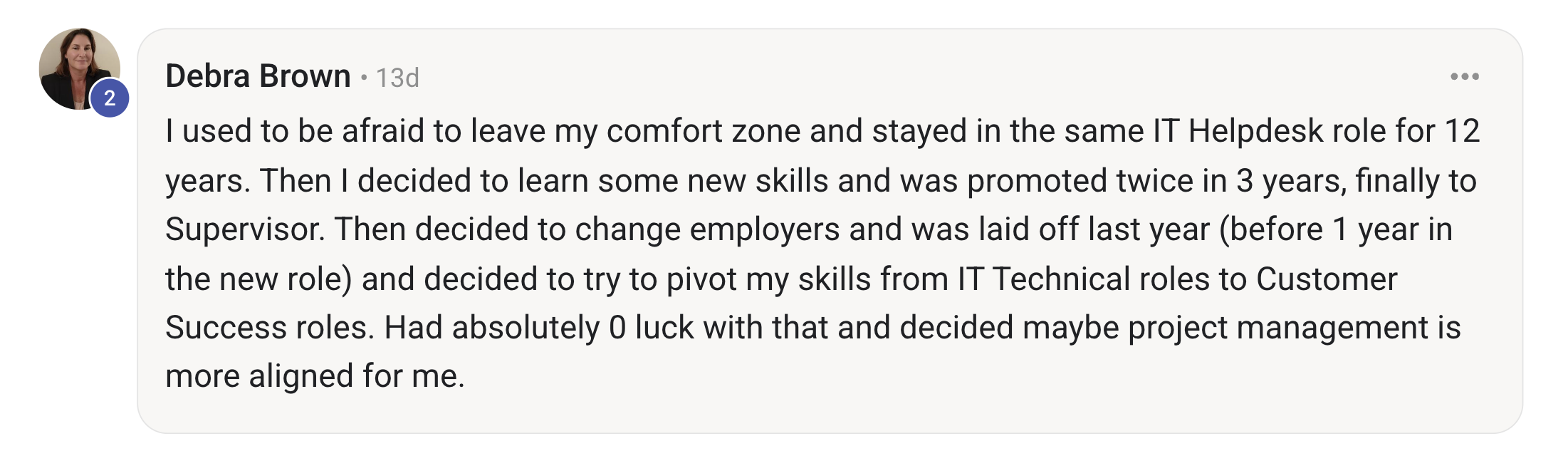
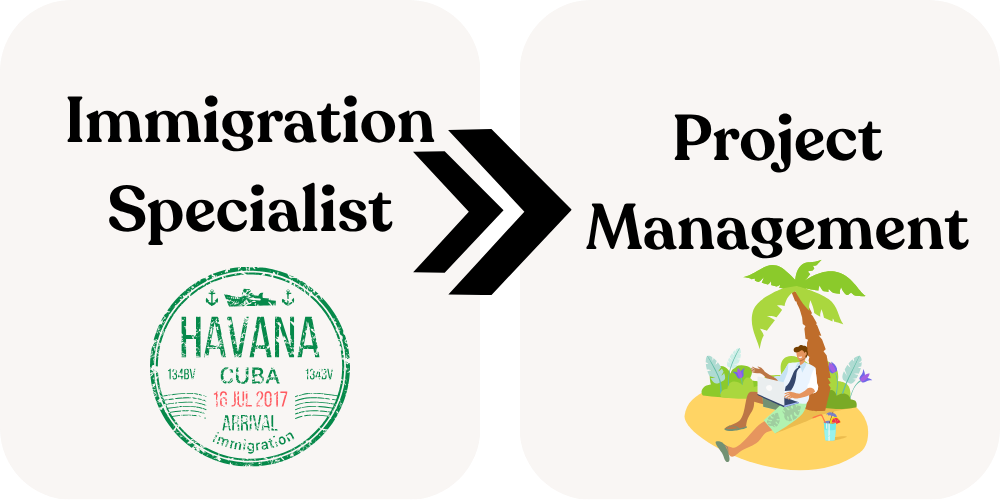





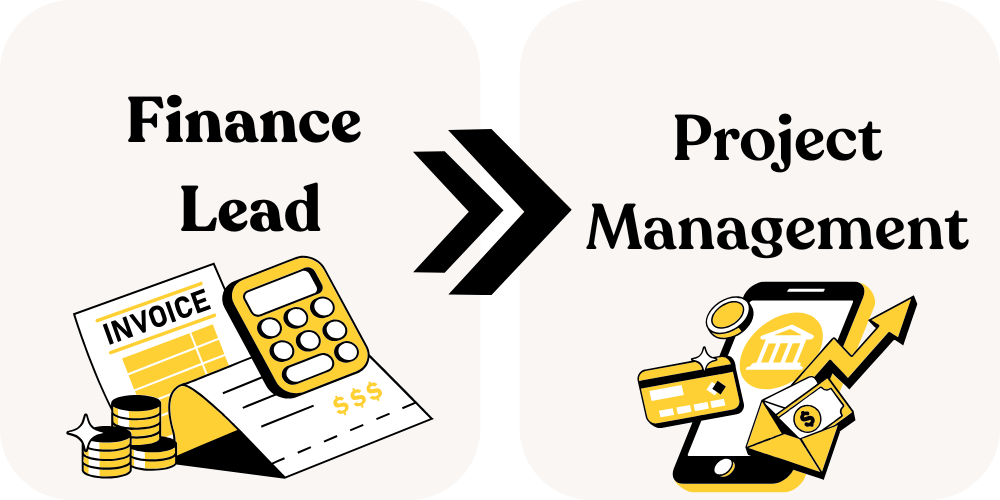

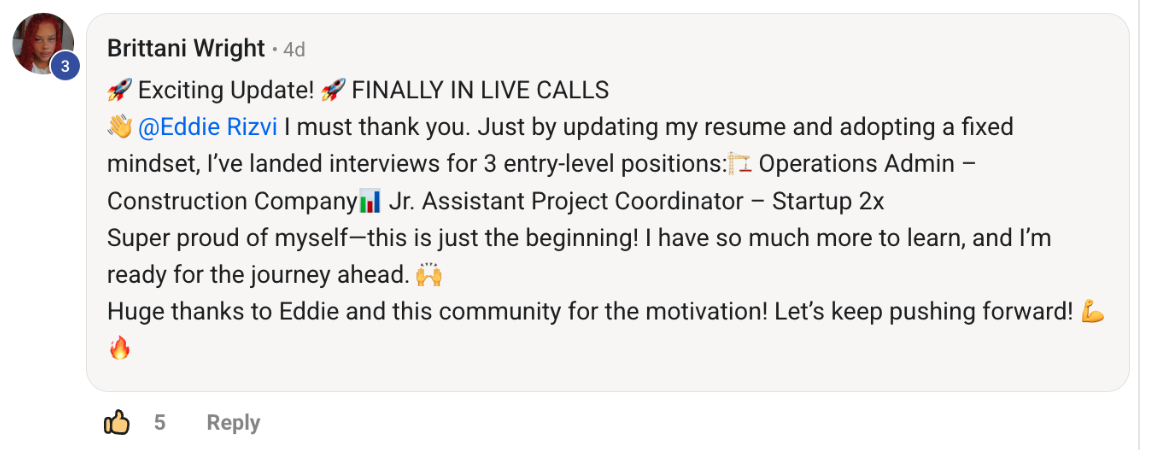
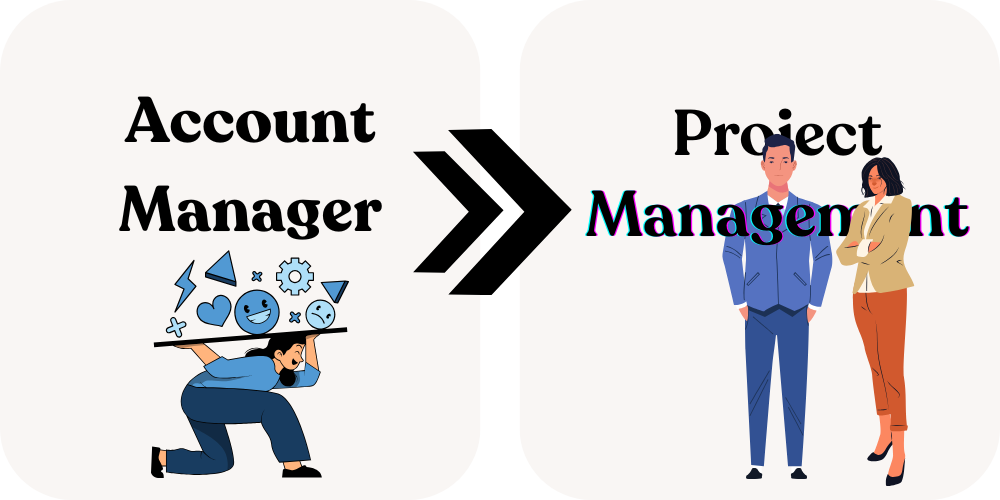

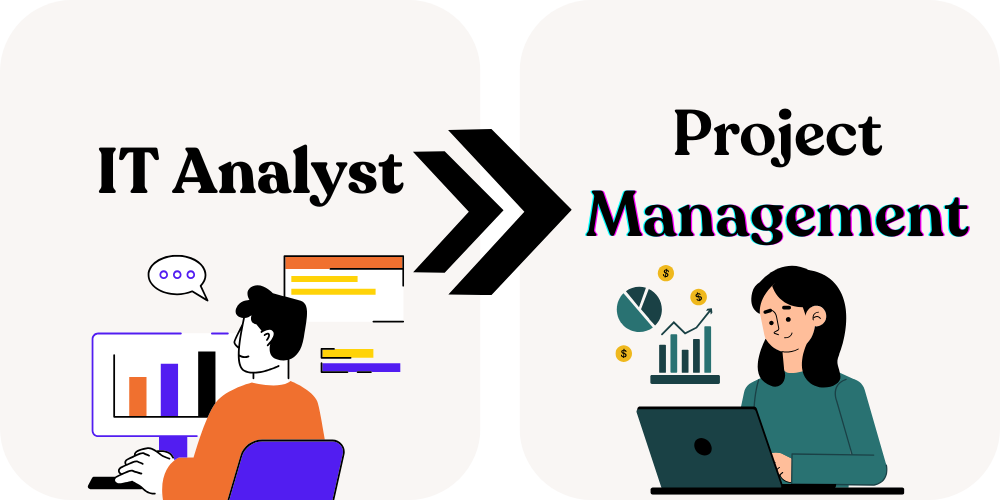

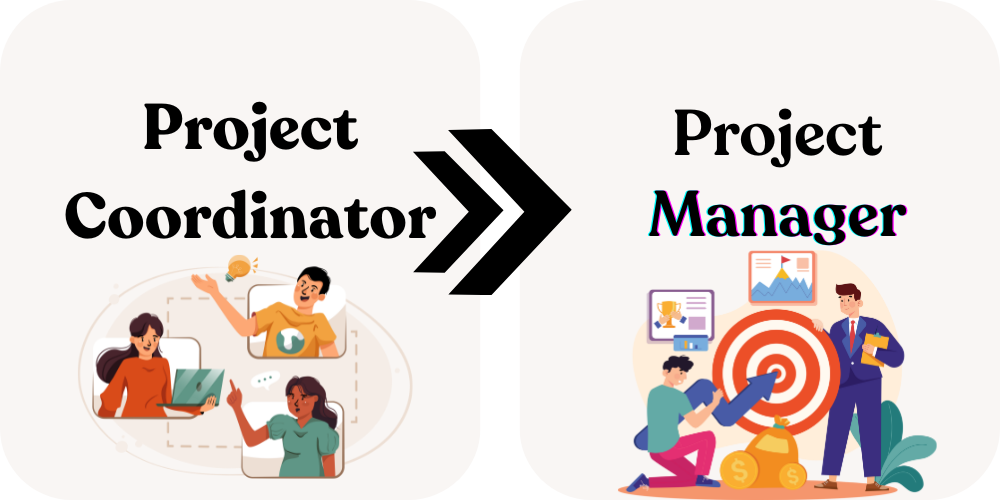

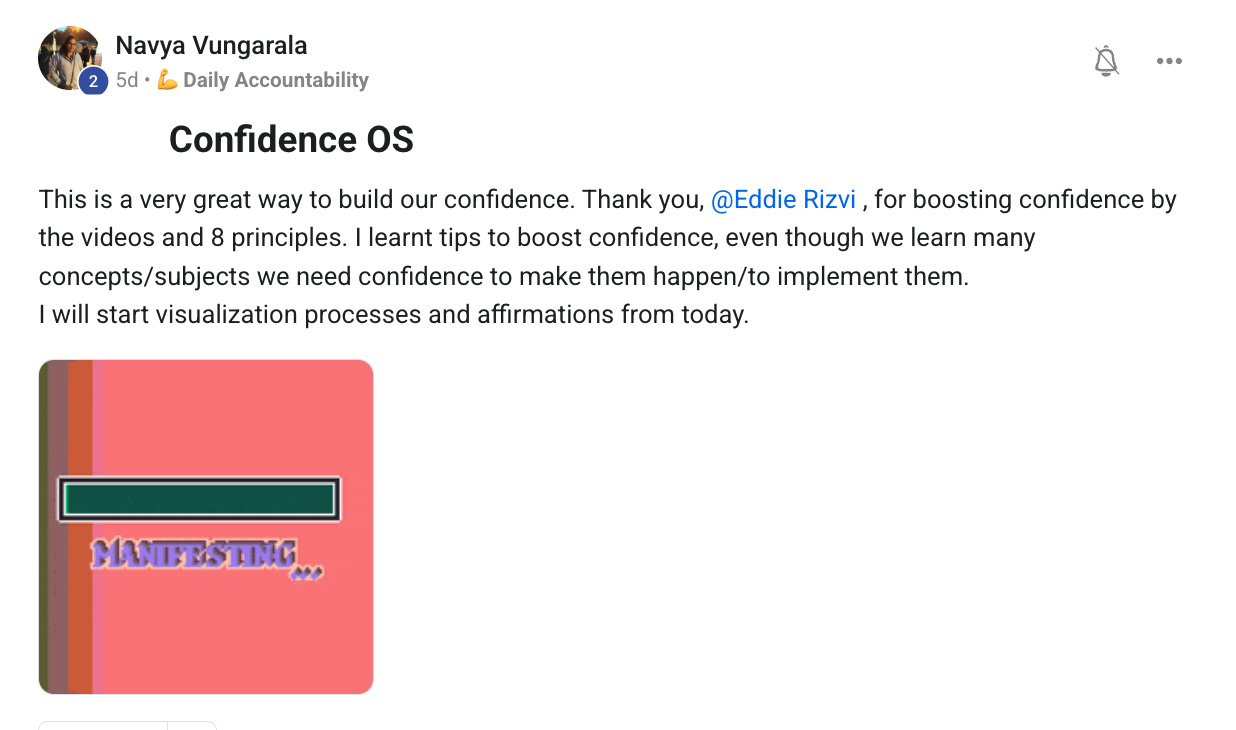
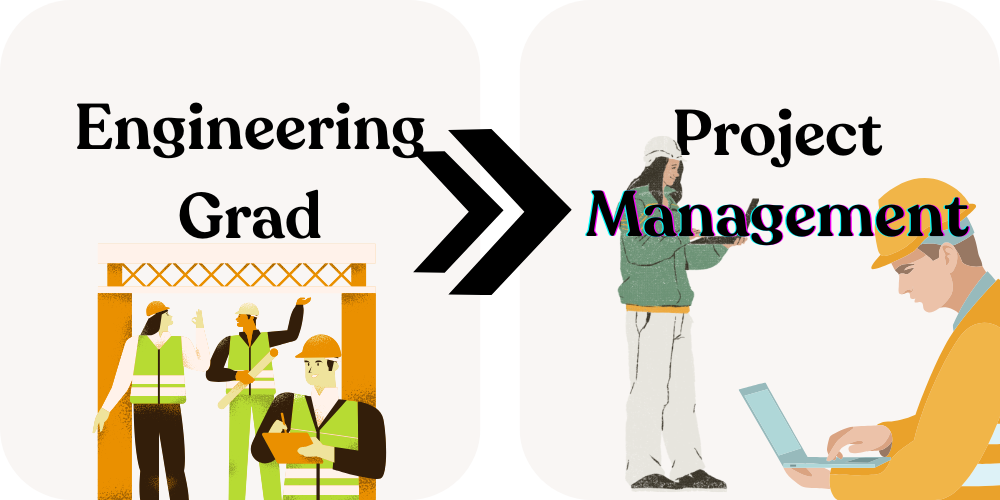

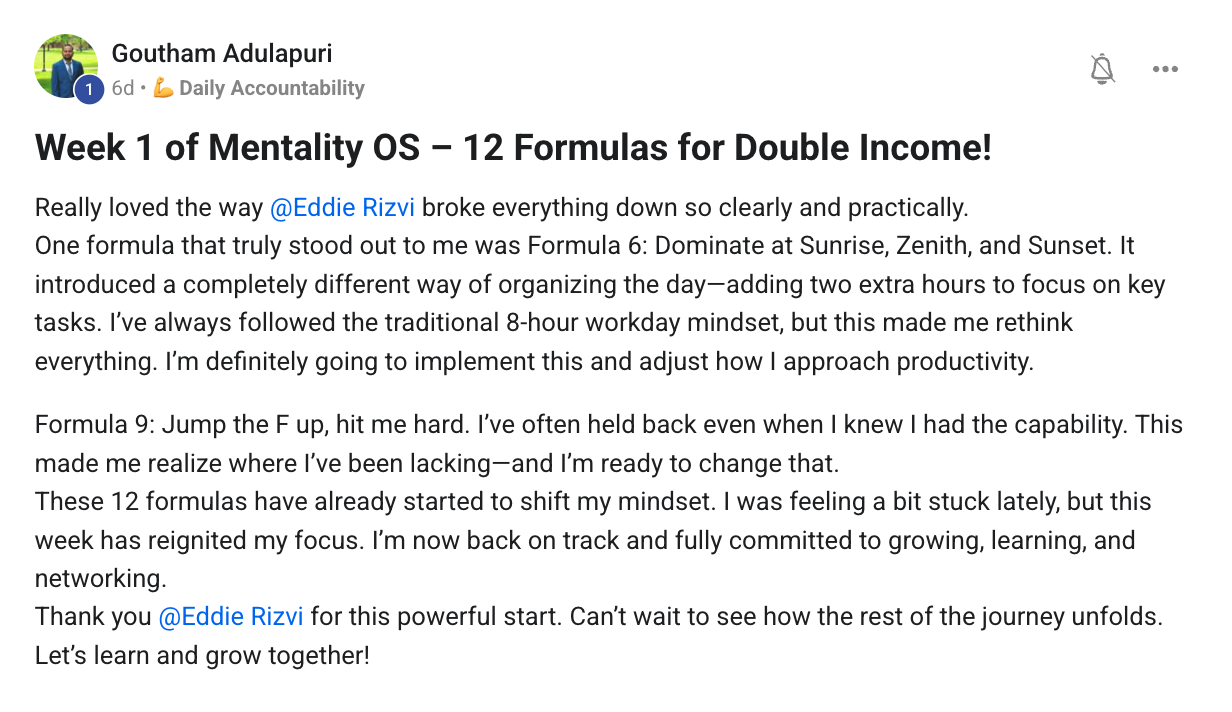
Members inside The Eddie System come from roles like:
IT Helpdesk
Quality Assurance
Operations
Customer Support
Associate Project Management
Business Analysts, Coordinators, and Specialists
They’re not starting over.
They’re reframing and applying the skills they already have —
inside a real project environment.
Once they’re operating inside projects:
Their communication changes.
Their confidence changes. Their language changes.And hiring managers notice.
Project management isn’t learned by switching titles.
It’s learned by being inside projects.
The PMO doesn’t “convert” people into project managers.
It gives them:
Exposure to real delivery
Practice with real artifacts
Repetition inside real workflows
That’s what makes the transition credible —
not the job they came from.
If you’re already capable — but missing real project exposure —
this environment fills that gap.
And if you’re expecting a passive course, shortcuts, or guarantees…
This probably isn’t for you.
You don’t need:
You just need to be willing to show up and engage.
Real experience requires involvement.
There’s no way around that.
Inside the PMO, you’re expected to:
This is how real project managers are developed.
If you want real exposure, this was built for you.
If you want shortcuts, it wasn’t.
How experienced project managers think, prioritize, and make decisions under pressure
Communication, leadership, prioritization, and decision-making — applied inside real projects
How projects actually move from initiation to closure inside real organizations
Handling ambiguity, tradeoffs, stakeholder pressure, and imperfect information
Forecasting, scheduling, and financial awareness as they show up in real projects
Status updates, executive communication, and artifacts that decision-makers actually read
Not just how tools work — but when and why they’re used
Confidence built by operating, presenting, and making decisions — not affirmations
When you enter The Eddie System, you’re stepping into a live PMO environment — with active projects, real workflows, and other members operating alongside you.
That said, there is a clear path for how you build experience inside the system.
Not a syllabus.
Not a checklist.
But a progression that mirrors how real project managers develop.
Here’s how it works.
 STEP 1 — CORE PMO FOUNDATION (4 WEEKS)
Learn how real project managers operate — before running projects yourself
Your first step is the core Eddie System training, designed to give you context, language, and structure before you step into simulations.
Over approximately 4 weeks, you’ll work through:
This is not passive learning.
You’ll complete real PMO-style deliverables along the way, so you’re not just understanding the work — you’re practicing it.
This phase prepares you to operate inside projects with confidence, not guesswork.
STEP 2 — LIVE PROJECT SIMULATIONS (CORE EXPERIENCE)
This is where experience is built
Once you’ve completed the core foundation, you step into realistic project simulations inside the PMO.
Here, you operate as a project manager (or project coordinator), working through:
These aren’t one-off exercises.
They’re immersive simulations designed to replicate how projects actually unfold — including ambiguity, constraints, and decision pressure.
This is where:
STEP 3 — JOB HUNT & POSITIONING SYSTEM
Translate experience into interviews and offers
Once you’ve operated inside projects, the final step is learning how to position that experience correctly.
Inside the Job Hunt Challenge and Job Landing System, you’ll focus on:
This step isn’t about “selling yourself.”
It’s about accurately describing work you’ve already done — in a way employers understand and respect.
 ONGOING — LIVE PMO ENVIRONMENT
Throughout every step, you remain inside the live PMO environment.
That means:
There’s no rush and no artificial deadline.
You stay inside the environment as long as you want to continue building experience.
 TIME COMMITMENT (REALISTIC EXPECTATIONS)
Most members spend:
Like real work, the more you engage, the more you gain — but the path is flexible.
This isn’t about completing a course.
It’s about progressing through real project exposure — the same way project managers do in the real world.

It’s a live Project Management Office (PMO).
While there is a structured 4-week core foundation to prepare you, the real value comes from operating inside an active PMO environment with real projects, simulations, workflows, and decision-making.
You’re not just consuming lessons — you’re participating in how projects actually run.
Yes — and that’s the point.
You’re not claiming hypothetical knowledge.
You’re describing work you’ve actually done inside a PMO environment.
Hiring managers care less about where experience came from and more about:
How you explain decisions
Whether you understand tradeoffs
Whether you sound like someone who’s been inside projects
This experience is designed to hold up in real interview conversations.
No prior PM or IT experience is required.
Many members come from adjacent roles such as:
Operations
QA
IT support
Customer success
Analysts, coordinators, or specialists
The system is built to help you translate existing professional skills into project management context, not start from zero.
No.
This is not a placement service, recruiter, or guarantee.
What it does provide is:
Real experience
Clear positioning
Interview-ready language
Confidence rooted in actual project exposure
Those are the things that materially improve outcomes — without making promises the real world doesn’t work that way.
There’s a 7-day money-back guarantee.
If you enter the PMO and feel the environment isn’t a fit, you can request a refund — no friction, no pressure.
You’re gaining defensible project management experience, not theoretical practice.
That includes:
Working through real project scenarios
Creating PMO-grade deliverables
Managing scope, timelines, risks, and stakeholders
Presenting work and moving projects through phase gates
Observing how real PM decisions are made
This is the same type of exposure junior and mid-level PMs gain on the job — without needing the job first.
Yes. Most members are working full-time.
The system is designed to be:
Flexible
Self-paced
Compatible with real life
On average, members spend 3–4 hours per week, with the option to go deeper during simulations.
There are no penalties for going slower — just like in real work, engagement compounds results.
That’s common — and often why people end up here.
Most members already understand PM concepts but struggle because they’ve never applied them in real project environments.
The Eddie System fills that gap by giving you:
Context
Repetition
Exposure
It’s not a replacement for knowledge — it’s the missing layer that turns knowledge into confidence.
There’s no required end date.
Some members stay just long enough to:
Complete the foundation
Run simulations
Prepare for interviews
Others stay longer to:
Build deeper experience
Observe more projects
Continue sharpening their delivery skills
You stay as long as the environment is adding value.
This is not a fit if you’re:
Looking for a passive course
Wanting a certificate instead of experience
Expecting shortcuts or guarantees
Unwilling to participate or think critically
Not serious about operating like a professional
The PMO rewards engagement — not spectatorship.
If what you’ve been missing is real project exposure, the next step is simple:
Enter the PMO.
Start operating.
Build experience the way real project managers do.